The blog topic of the week at RR was to either write about Summer or the end of Summer. This is where it led me. Inspired by the Squirrel's playfulness yesterday.
**
What’s that little squirrel? Oh, you’re collecting nuts and berries, getting ready, huh. That’s not a bad idea. Maybe I should gather some books, good Fall books, books of change, contemplation. The end of Summer brings a different flavor that’s for sure. Is there such a thing as a Summer book or Summer reading? Do you think that refers to having more time to read at our leisure or do you suppose it reflects the vibrancy and fun of the Summer sunshine?
I’ll miss the sun too, but sometimes when we have a series of grey days, it calms me. The clouds look different; the light is subdued, mirroring the rustle of the fall leaves as they make their change from light to dark, and then bareness, nakedness. There’s something beautiful about a naked tree, Little Squirrel. It lies there just itself, nothing to hide, as if to say, “don’t be afraid, look at me. I am you. Don’t be frightened.”
We appreciate the sun more when big grey clouds come. Different flowers will bloom. People’s moods will change. Doggies will bundle up in red knitted sweaters. The hills will begin to change too. Of all the seasons, Fall really does show us how to flow with change, doesn’t it Little Squirrel?
Little Squirrel?…
Friday, September 3, 2010

Wednesday, September 1, 2010
Beginning Scriptwriting ~ Notes/Reflections II
On the second session of class, the chairs were arranged differently, two rows were angled, so that when I sat at the last row, I faced in and could see all the other desks, the sides of people’s profiles. Once the instructor arrived, he asked us to make a large circle with our desks in order to see everyone. He said this is how all the classes going forward would go, unless perhaps we viewed a movie, then we may have to rearrange. I like this format much better.
It appeared that we lost some people from the first day. They must have decided that this wasn’t the class for them.
From our discussion of character, we moved on to Structure. The instructor tells us that “Structure will take care of itself if the characters are written well.” It seems to be then that the characters really hold a movie together. I must admit that there are a few movies where I got so lost in the characters, I didn’t even care if there was a plot or not. Somehow it worked for me. I suppose too that in certain instances, a movie has a different purpose and the characters go to the background. The one film, and it’s been a long time since I’ve seen it, that comes to mind is Akira Kurosawa’s Dreams. A visual masterpiece.
The instructor bestowed us with words of wisdom from Baudelaire about “being drunk.” It was pure synchrony that I had just read these words a few days before in a little inspirational book I found at the library:
“You need to become drunk. It all depends on this, it is the only key to the problem. In order not to feel the terrible burden of time weighing you down to the point of oppression, you must unremittingly get drunk. But on what? Wine, poetry, or virtue—the choice is yours. Yet drunk you must be…In order not to be slaves or victims of time, you must get completely drunk!”
It was perfect and I feel drunk just being in this class because I get to continue learning and writing and struggling and loving it!
We revisited the five elements related to character:
I. Inciting incident [Call to adventure]
II. Progressive complications [Descent to the underworld]
III. Crisis decision [Character resurfaces]
IV. Obligatory scene (climax) [Back to the surface—a new them]
V. Denouement (French for unraveling) [Gift in a sense that they give the world]
He pointed out how these five elements run parallel to Joseph Campbell’s Hero’s Journey. I’ve put the phrasing the instructor used in brackets.
We learned about beats of action. “Action always means an intention.” He said to think of a beat of action as “bits of action.” I had a difficult time wrapping my mind around a beat of action, but I think it makes more sense since I’ve had time to think about it. Since I’m a week behind in my reflection, I do know from this recent Monday class that we will be talking more about beats of action, as well reviewing them in movies next week. By then it should be more clear in my head.
Back to last week. The instructor gave us our assignment. It was to write a scene in five beats of action that would open a movie. We were to write it with no characters. No people; animals were OK. No letters, no words. No moving cars. We were to create characters without the characters actually being there. I raised my hand and asked if this scene should have movement. Yes, he said. It should begin to lead us somewhere. My naiveté, but I was struggling with it. I didn’t want to revert to the usual scenes that my mind would venture to create, yet what else is there? At least this is how I was internalizing it. He said this would prove to be a challenge when we sat down to write it and he suggested we go sit for an hour or however long it took, but to take our time to think of a situation before writing the scene.
He closed with some reminders on writing. Use the present tense. Active, not passive. Be precise in noun and verb choice. Show, don’t tell. Stay away from adjectives and adverbs. Some of the usuals.
I took his words to heart. I know that in order to break rules, we must first learn or relearn the rules, which he reminded us of. I knew that he wanted tight word pictures for our scenes, so I attempted just that. I knew he didn’t want a lengthy piece.
For the whole week, I mostly held the assignment in my thinking box and knew that I didn’t want to describe someone’s room. I knew that I had to choose something with meaning or it would fall flat. I felt stuck, but knew that inspiration and meaning would join. I did have a strong image of a real place and I jotted down how I saw it with a few words in my notebook. I thought it would be the start of the scene. After much thinking and thinking, on the day of class, before work, I sat at the computer and the scene started coming to me, except it didn’t begin with that one image. My emotions and soul were pouring out because the image I painted was of the French Quarter in New Orleans, but only certain portions that left a deep emotional, visual impression on me. I then added a few elements that were not in my original thinking. I was pleased. I printed it and cut out a line and ended up adding the original image as my final one. I read it aloud and made sure each word belonged and furthered the imagery along. It was done. I could do nothing more. I had my five beats.
When I arrived to class later that afternoon, I must say, I was grateful that I had taken public speaking in the summer because from here on out, we would be reading and speaking aloud. I didn’t feel nervous. My heart didn’t pound. I don’t think I’ve ever read aloud something creative that I wrote, at least not to a classroom. The speech yes, but this was different. It felt good. Each student would read their scene aloud and each one of us and then the instructor would give feedback. We were to listen only and not try to say what we may have tried to convey because it was all in the listening. We would then know if our audience was receiving our scene as we intended. If not, what would we have to change? For one woman in particular, she wanted to keep explaining her piece. It was a challenge for her to just listen. She finally did allow herself to hear the feedback and take it in and make literal or mental notes. When it was my turn to give feedback, the instructor had to keep telling me to speak up, so I still have to work on that.
I started doubting myself because what everyone else wrote was much longer than what I wrote, and their scenes were all so good. Some folks were very detailed, but I knew a couple of student’s pieces in particular, although quite good, were bordering on beginnings of novels. It was too much for scriptwriting. Once scene had empty tables with plates to create the character without them being there. Ah, so that’s one way of doing it. There were cats, birds, butterflies, mountains, beetles. Lot’s of interesting details. Bedrooms, photo darkrooms, mines. Each person brought a little bit of their worlds to the stage.
It was great hearing each and every scene and how people created these scenes that came to life with visual images. And hearing all the feedback was just as enjoyable. Finally it was my turn. I edged up in my seat because I can talk louder this way. But of course, no sooner do I start than I’m asked to, “Speak up, please. Just go ahead and pull a Dizzy Gillespie.” I chuckle lightly and begin again and this time my voice did come out loud and clear, maybe like one of those horns. I held my page in my left hand and had my right hand’s fingers curled under the desk. I made sure to try and not read the scene too quickly. I had broken it down in its five beats of action. I finished, put my page down and brought my eyes up slowly to await who would begin the commenting. I honestly wasn’t sure how it went. I didn’t know if they would see the images I had painted with my words. But as I heard the feedback, I felt an emotional stirring inside of me. They saw it and it reached them, just as it had moved me inside. It meant everything to hear that they thought the images were beautiful—that I was able to convey this scene that I felt with my soul and meant something to me. After everyone had chimed in, the instructor then took off his glasses and said that he doesn’t usually care for the literary, but that it worked here. He said he appreciated the economy of the words. However, he said it did seem to be more than one scene and that it moved too fast. Otherwise, he also was able to visualize the scene and its movement. If anything it was a great first reading. I most definitely felt drunk with joy after class and treated myself to a pot roast dinner and a beer at a local restaurant and wrote all about it in my notebook and just felt so good inside.
It appeared that we lost some people from the first day. They must have decided that this wasn’t the class for them.
From our discussion of character, we moved on to Structure. The instructor tells us that “Structure will take care of itself if the characters are written well.” It seems to be then that the characters really hold a movie together. I must admit that there are a few movies where I got so lost in the characters, I didn’t even care if there was a plot or not. Somehow it worked for me. I suppose too that in certain instances, a movie has a different purpose and the characters go to the background. The one film, and it’s been a long time since I’ve seen it, that comes to mind is Akira Kurosawa’s Dreams. A visual masterpiece.
The instructor bestowed us with words of wisdom from Baudelaire about “being drunk.” It was pure synchrony that I had just read these words a few days before in a little inspirational book I found at the library:
“You need to become drunk. It all depends on this, it is the only key to the problem. In order not to feel the terrible burden of time weighing you down to the point of oppression, you must unremittingly get drunk. But on what? Wine, poetry, or virtue—the choice is yours. Yet drunk you must be…In order not to be slaves or victims of time, you must get completely drunk!”
It was perfect and I feel drunk just being in this class because I get to continue learning and writing and struggling and loving it!
We revisited the five elements related to character:
I. Inciting incident [Call to adventure]
II. Progressive complications [Descent to the underworld]
III. Crisis decision [Character resurfaces]
IV. Obligatory scene (climax) [Back to the surface—a new them]
V. Denouement (French for unraveling) [Gift in a sense that they give the world]
He pointed out how these five elements run parallel to Joseph Campbell’s Hero’s Journey. I’ve put the phrasing the instructor used in brackets.
We learned about beats of action. “Action always means an intention.” He said to think of a beat of action as “bits of action.” I had a difficult time wrapping my mind around a beat of action, but I think it makes more sense since I’ve had time to think about it. Since I’m a week behind in my reflection, I do know from this recent Monday class that we will be talking more about beats of action, as well reviewing them in movies next week. By then it should be more clear in my head.
Back to last week. The instructor gave us our assignment. It was to write a scene in five beats of action that would open a movie. We were to write it with no characters. No people; animals were OK. No letters, no words. No moving cars. We were to create characters without the characters actually being there. I raised my hand and asked if this scene should have movement. Yes, he said. It should begin to lead us somewhere. My naiveté, but I was struggling with it. I didn’t want to revert to the usual scenes that my mind would venture to create, yet what else is there? At least this is how I was internalizing it. He said this would prove to be a challenge when we sat down to write it and he suggested we go sit for an hour or however long it took, but to take our time to think of a situation before writing the scene.
He closed with some reminders on writing. Use the present tense. Active, not passive. Be precise in noun and verb choice. Show, don’t tell. Stay away from adjectives and adverbs. Some of the usuals.
I took his words to heart. I know that in order to break rules, we must first learn or relearn the rules, which he reminded us of. I knew that he wanted tight word pictures for our scenes, so I attempted just that. I knew he didn’t want a lengthy piece.
For the whole week, I mostly held the assignment in my thinking box and knew that I didn’t want to describe someone’s room. I knew that I had to choose something with meaning or it would fall flat. I felt stuck, but knew that inspiration and meaning would join. I did have a strong image of a real place and I jotted down how I saw it with a few words in my notebook. I thought it would be the start of the scene. After much thinking and thinking, on the day of class, before work, I sat at the computer and the scene started coming to me, except it didn’t begin with that one image. My emotions and soul were pouring out because the image I painted was of the French Quarter in New Orleans, but only certain portions that left a deep emotional, visual impression on me. I then added a few elements that were not in my original thinking. I was pleased. I printed it and cut out a line and ended up adding the original image as my final one. I read it aloud and made sure each word belonged and furthered the imagery along. It was done. I could do nothing more. I had my five beats.
When I arrived to class later that afternoon, I must say, I was grateful that I had taken public speaking in the summer because from here on out, we would be reading and speaking aloud. I didn’t feel nervous. My heart didn’t pound. I don’t think I’ve ever read aloud something creative that I wrote, at least not to a classroom. The speech yes, but this was different. It felt good. Each student would read their scene aloud and each one of us and then the instructor would give feedback. We were to listen only and not try to say what we may have tried to convey because it was all in the listening. We would then know if our audience was receiving our scene as we intended. If not, what would we have to change? For one woman in particular, she wanted to keep explaining her piece. It was a challenge for her to just listen. She finally did allow herself to hear the feedback and take it in and make literal or mental notes. When it was my turn to give feedback, the instructor had to keep telling me to speak up, so I still have to work on that.
I started doubting myself because what everyone else wrote was much longer than what I wrote, and their scenes were all so good. Some folks were very detailed, but I knew a couple of student’s pieces in particular, although quite good, were bordering on beginnings of novels. It was too much for scriptwriting. Once scene had empty tables with plates to create the character without them being there. Ah, so that’s one way of doing it. There were cats, birds, butterflies, mountains, beetles. Lot’s of interesting details. Bedrooms, photo darkrooms, mines. Each person brought a little bit of their worlds to the stage.
It was great hearing each and every scene and how people created these scenes that came to life with visual images. And hearing all the feedback was just as enjoyable. Finally it was my turn. I edged up in my seat because I can talk louder this way. But of course, no sooner do I start than I’m asked to, “Speak up, please. Just go ahead and pull a Dizzy Gillespie.” I chuckle lightly and begin again and this time my voice did come out loud and clear, maybe like one of those horns. I held my page in my left hand and had my right hand’s fingers curled under the desk. I made sure to try and not read the scene too quickly. I had broken it down in its five beats of action. I finished, put my page down and brought my eyes up slowly to await who would begin the commenting. I honestly wasn’t sure how it went. I didn’t know if they would see the images I had painted with my words. But as I heard the feedback, I felt an emotional stirring inside of me. They saw it and it reached them, just as it had moved me inside. It meant everything to hear that they thought the images were beautiful—that I was able to convey this scene that I felt with my soul and meant something to me. After everyone had chimed in, the instructor then took off his glasses and said that he doesn’t usually care for the literary, but that it worked here. He said he appreciated the economy of the words. However, he said it did seem to be more than one scene and that it moved too fast. Otherwise, he also was able to visualize the scene and its movement. If anything it was a great first reading. I most definitely felt drunk with joy after class and treated myself to a pot roast dinner and a beer at a local restaurant and wrote all about it in my notebook and just felt so good inside.
Friday, August 27, 2010
A Connected Day

I have often thought to myself that I wished I had asked more questions of my grandmother sooner, but I wouldn’t have understood it all because I didn’t know all the Spanish words she used. She spoke in Spanish only, and I in Spanish with her when I could, and English when I couldn’t find the Spanish words. I told myself that I would learn Spanish fluently before she died, but I didn’t try hard enough. I thought time would keep going. I’m not hard on myself about it. I know that if I wanted to I could, but perhaps it was not my time to learn it more fluently. I wouldn’t have anyone to speak with and practice. There may be other things waiting for me.
I tried to ask her about our Indian origins, because I figured we had them, and she told me of two tribe names: Coras and Huichole. I know that though she was a devout Catholic, from stories that my uncle has conveyed, she also possibly consulted “nature doctors” to combat an ailment that he once had as a young boy. I don’t recall the name he used. He remembers the experience well and said it most certainly did not work. Eventually they took him to a regular doctor.
I do know that part of my love of nature stems from my grandmother and though I’m not born into a tribe, I very much feel that I belong to one—to the tribe of Nature in all her glory. It is a feeling inside. Sometimes these feelings come out, and sometimes they show themselves in the glance of an eye, in the way a person stops to bend over and look at the beautiful intricacies of the soil, the twigs, branches, birds—and how when one looks up into the sky and remembers this is the great temple—all of it.
I am a feeler, as we know, and in the end it’s unimportant to me what “I know” or what “they” say. What’s important to me is that I can feel my pulse in the pulse of this great world and that I can feel my pulse in others and that I tread lightly and take in the moments—and even when I’m feeling sad or angry, honor those moments too—honor all feelings and know that nature is there with open arms.
**
I bid you a wonderful day and weekend, always.
**
Here is an Indian poem that I love that beats with my heart.
From “The Literature of California: Writings from the Golden State.” Edited by Jack Hicks, James D. Houston, Maxine Hong Kingston, Al Young.
Prayer for Good Fortune (Yokuts)
My words are tied in one
With the great mountains,
With the great rocks,
With the great trees,
In one with my body
And my heart.
Do you all help me
With supernatural power,
And you, day,
And you, night!
All of you see me
One with this world!
Tuesday, August 24, 2010
Beginning Scriptwriting ~ Notes/Reflections I
First class I arrived 10 minutes early and took a seat in the front center row. Students began piling in and soon all the seats were taken. I couldn’t see everyone, since they were all behind me, but I did see lots of young faces, some older. The instructor sidled in through the tight desks. An older gentleman, up in his years. I seem to keep finding myself amongst the matures. That suits me just fine. This day he was wearing one of those caps, the sort I could see a writer wearing in a French café.
We began talking about character. He said that, “Most people think they can visualize film, but it does not happen in the obvious description, but in the character—the character’s wants and desires.”
I thought it interesting too that he said most cultures go through the emotions, that is except for the French. They tend to go through the mind. It made me think about the few French movies I have seen. Yes, I can see that—the mind.
A character chooses to go for something or is forced into something—forced into an adventure. We are reminded that, “Characters are not people.”
Another reminder, and something that most storytellers and writers know is, “First thing is to grab an audience and have something that ‘pays off’ in the end.”
Why do we see films? He says that everyone goes to see a film for the emotional experience. Some people like the same experience over and over, while other’s like new experiences.
We talk about the differences between characterization and character. Simply put, characterization is what we can observe in other people. As he says, they are the “External accoutrements of our life.” A character is what a person or a character will do under pressure. We need to put a character under stress to see how they will react.
The book for our class is Robert McKee’s, Story: Substance, Structure, Style, and the Principles of Screenwriting. I’ve had this book on my shelves for about 12 years when a friend mentioned it back then. I only read a few passages here and there and it stayed on the shelves collecting dust. Now, the book reenters my consciousness. Everything is going along fine in reading up to the point of when McKee talks about story, which is early on. I realize I’m in over my head, but hell, I’m here, so I may as well stay and get what I can out of the ride. I’m a reflective writer, a journaler, an observer. Sometimes an essay, a poem, maybe a story. But, I don’t believe I’m a natural storyteller in the sense of creating characters. I observe characters, but I’m afraid to put them through conflict. I’m afraid because I feel out of control with this scriptwriting business, but I feel that I’m right where I’m supposed to be. I can already get glimpses that my prose writing is going to pose conflicts to fit myself into this container that seems so precise, where I need to dig deep into my characters who don’t even exist right now. What I’m finding is I keep coming back to my own experiences and I don’t want to do that. My personal material usually finds its way into my reflective and essay writing. But to bring it to this container feels naked, feels scary. It’s difficult to explain, especially since the class has only begun, but I can feel a resistance within myself. And even McKee cautions against the “personal story.”
I only know how to write truth, with the few exceptions where a tale has come out of me.
Two statements that McKee makes in his book that ring loud in my ears and make me ask myself if I’ve got what it takes are: “A storyteller is a life poet” and “Story talent is primary, literary talent secondary but essential.” I am hopeful that I at least get a glimmer of what it takes.
In the end, will I be able to create a story with characters that are real, multi-dimensional, and make the audience feel? I operate from my emotions, but I don’t know that this will be enough to help me with the story aspect.
We began talking about character. He said that, “Most people think they can visualize film, but it does not happen in the obvious description, but in the character—the character’s wants and desires.”
I thought it interesting too that he said most cultures go through the emotions, that is except for the French. They tend to go through the mind. It made me think about the few French movies I have seen. Yes, I can see that—the mind.
A character chooses to go for something or is forced into something—forced into an adventure. We are reminded that, “Characters are not people.”
Another reminder, and something that most storytellers and writers know is, “First thing is to grab an audience and have something that ‘pays off’ in the end.”
Why do we see films? He says that everyone goes to see a film for the emotional experience. Some people like the same experience over and over, while other’s like new experiences.
We talk about the differences between characterization and character. Simply put, characterization is what we can observe in other people. As he says, they are the “External accoutrements of our life.” A character is what a person or a character will do under pressure. We need to put a character under stress to see how they will react.
The book for our class is Robert McKee’s, Story: Substance, Structure, Style, and the Principles of Screenwriting. I’ve had this book on my shelves for about 12 years when a friend mentioned it back then. I only read a few passages here and there and it stayed on the shelves collecting dust. Now, the book reenters my consciousness. Everything is going along fine in reading up to the point of when McKee talks about story, which is early on. I realize I’m in over my head, but hell, I’m here, so I may as well stay and get what I can out of the ride. I’m a reflective writer, a journaler, an observer. Sometimes an essay, a poem, maybe a story. But, I don’t believe I’m a natural storyteller in the sense of creating characters. I observe characters, but I’m afraid to put them through conflict. I’m afraid because I feel out of control with this scriptwriting business, but I feel that I’m right where I’m supposed to be. I can already get glimpses that my prose writing is going to pose conflicts to fit myself into this container that seems so precise, where I need to dig deep into my characters who don’t even exist right now. What I’m finding is I keep coming back to my own experiences and I don’t want to do that. My personal material usually finds its way into my reflective and essay writing. But to bring it to this container feels naked, feels scary. It’s difficult to explain, especially since the class has only begun, but I can feel a resistance within myself. And even McKee cautions against the “personal story.”
I only know how to write truth, with the few exceptions where a tale has come out of me.
Two statements that McKee makes in his book that ring loud in my ears and make me ask myself if I’ve got what it takes are: “A storyteller is a life poet” and “Story talent is primary, literary talent secondary but essential.” I am hopeful that I at least get a glimmer of what it takes.
In the end, will I be able to create a story with characters that are real, multi-dimensional, and make the audience feel? I operate from my emotions, but I don’t know that this will be enough to help me with the story aspect.
Saturday, August 21, 2010
A Man In Wheat Colored Slacks
We board the shuttle for our destination and the mature gentleman who is our driver welcomes us and tells us where we are going. I am fixated on him and his words—steady and kind. He is tall, but not too tall and stands upright. He has silver hair topped with a ranger style hat. It’s his light blue eyes contrasted against the maturity of his silver hair and the comfort he finds in his own body that draws me in. When he’s finished speaking, my eyes are glassy and I look to my friend and say how beautiful that man is and I feel a lump in my throat. She agrees. She is equally mesmerized.
It is then that a recent image comes to mind and I recount it to her. I am sitting at the stoplight that is parallel with a shopping center. Waiting, I see a mature gentleman crossing the walk moderately with a slight limp in his leg. Each step he takes, he has to bring the right one around with just a little extra effort. He is clad in wheat colored slacks and matching hat and jacket—this man rests upon my eyes as if the sun is shining brightly on a wheat field. In his arms he is carrying a large bouquet of wrapped flowers, yellows and reds peek out from the wrap. I am nearly brought to tears at the sight. Where is he going I wonder. I imagine, he is headed to present some lucky someone with this lovely bouquet and looking dapper.
If he were a young man, dressed causally, or even a man in a business suit, would I have the same emotional response? There is something about those in their mature years that touches a part of me, humbles me and also brings me a sad happiness. Something more profound is brought to his gesture.
I was thankful the light was a long one. When it turned green, I crooked my neck, soaking in one last breath of that moment.
It is then that a recent image comes to mind and I recount it to her. I am sitting at the stoplight that is parallel with a shopping center. Waiting, I see a mature gentleman crossing the walk moderately with a slight limp in his leg. Each step he takes, he has to bring the right one around with just a little extra effort. He is clad in wheat colored slacks and matching hat and jacket—this man rests upon my eyes as if the sun is shining brightly on a wheat field. In his arms he is carrying a large bouquet of wrapped flowers, yellows and reds peek out from the wrap. I am nearly brought to tears at the sight. Where is he going I wonder. I imagine, he is headed to present some lucky someone with this lovely bouquet and looking dapper.
If he were a young man, dressed causally, or even a man in a business suit, would I have the same emotional response? There is something about those in their mature years that touches a part of me, humbles me and also brings me a sad happiness. Something more profound is brought to his gesture.
I was thankful the light was a long one. When it turned green, I crooked my neck, soaking in one last breath of that moment.
Friday, August 20, 2010
Moments with Squirrel
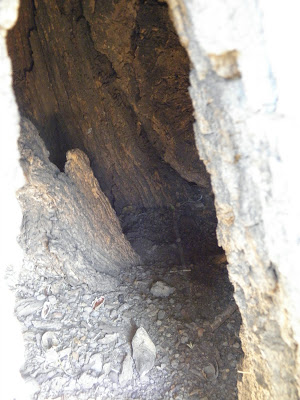
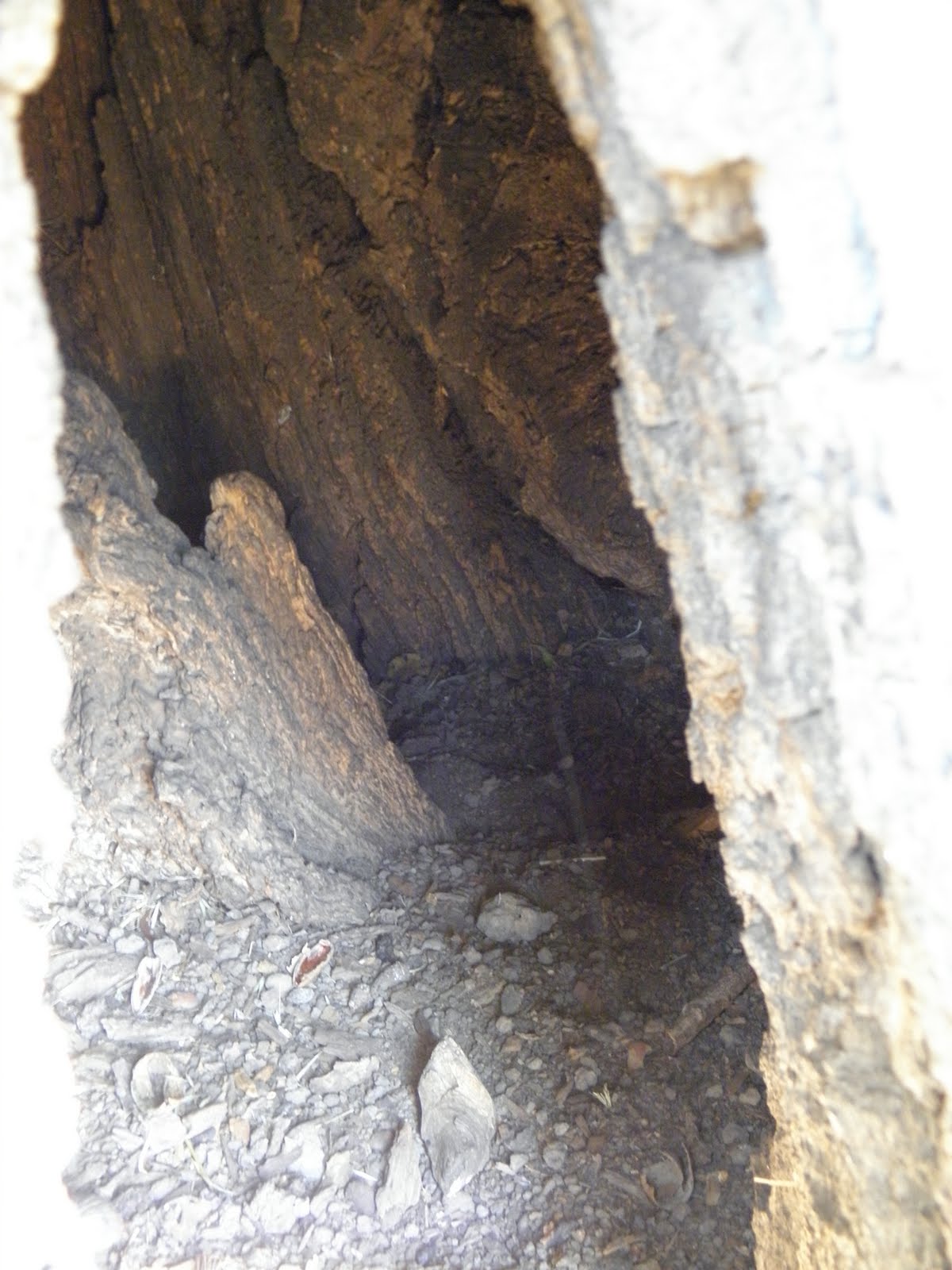
There is something about the openings of trees such as this. They conjure images of little worlds to be discovered, of the unknown.

This was a great oak, old and wise. "There aren't any critters here. Keep walking."
I walk in the other direction and see this squirrel blending into the grass and leaves. He is one with his surroundings I watch him dig in the crusted soil.

When I walk back, he's more alert.

And then he becomes aware of me and peers, dropping what he was nibbling. We are aware of each other.

This one was on the other side. There one moment,
 gone the next.

This was a great oak, old and wise. "There aren't any critters here. Keep walking."
I walk in the other direction and see this squirrel blending into the grass and leaves. He is one with his surroundings I watch him dig in the crusted soil.

When I walk back, he's more alert.

And then he becomes aware of me and peers, dropping what he was nibbling. We are aware of each other.

This one was on the other side. There one moment,
 gone the next.
Wednesday, August 18, 2010
Hawk

Hawks circle the mountain top, hunting. In the years that I’ve been here, it is the first that I’ve noted so many hawks in one spot on a regular basis. They circle by morning and dusk and it is quite a sight. I see them on my drive to town, over the hill, I do look and I keep my eyes on the road, but I keep stealing glances because I want this moment to stay with me, of the wheat colored grass, against the sky—whatever shade of blue or grey it is that day—and the freedom and strength of these massive creatures, that hunt with grace, that fly with ease and circle round and then swoop down. They cooperate with each other, circle round each other.
In my own little space, one hawk does fly and swoop—hunts to stay alive.
Subscribe to:
Posts (Atom)